
Updated: 17 December 2025 13:38:35
UN Official: We Are Working to Prevent a Darfur Scenario from Repeating in Kordofan
Moatinoon – Agencies
Mary Hélène Vernier, the representative of the United Nations High Commissioner for Refugees (UNHCR) in Sudan, said that the situation on the ground in the Arab country “does not inspire optimism in the near term,” stressing that the organization is working to prevent a repetition of what happened in Darfur in the Kordofan region.
This came in an interview with Anadolu Agency on the sidelines of her participation in the “Second Midterm Review of the Global Refugee Forum,” held in Geneva in partnership between the United Nations and the Swiss government.
Vernier noted that the overall situation in Sudan “has not seen any significant improvement.”
Since April 2023, the Sudanese army and the Rapid Support Forces (RSF) have been fighting over disagreements related to the transitional phase, a conflict that has led to famine, the killing of tens of thousands of Sudanese, and the displacement of around 13 million people.
Vernier expressed deep concern over the escalation of fighting over the past two months, particularly in the Darfur and Kordofan regions, where vast areas have witnessed new waves of violence and increasing attacks.
She pointed to what she described as “dramatic” events that took place in El Fasher, the capital of North Darfur State, in late October, which included “grave violations against civilians fleeing the city.”
On October 26, the Rapid Support Forces took control of El Fasher and committed massacres against civilians, according to local and international organizations, amid warnings of the entrenchment of a geographical division of the country.
Amid these atrocities, RSF commander Mohamed Hamdan Dagalo, known as “Hemedti,” acknowledged what he described as “excesses” committed by his forces in El Fasher, claiming that investigation committees had been formed.
Vernier added that the fighting did not stop in North Darfur but extended to areas in Kordofan, where drone attacks were recorded over the past two weeks.
Sudanese authorities have repeatedly announced that the Rapid Support Forces carried out drone attacks, resulting in civilian casualties and the destruction of civilian facilities.
The three states of the Kordofan region have, for weeks, witnessed fierce clashes between the army and the Rapid Support Forces, leading to the displacement of tens of thousands of Sudanese.
UN Concern
Regarding the situation in El Fasher, Vernier said that the United Nations does not have access to the city, which has come under the control of the Rapid Support Forces.
She noted that UNHCR and other UN agencies are operating in areas receiving displaced people from El Fasher, such as the Tawila area.
She added: “El Fasher has received wide and justified attention, and the situation in Kordofan has become a matter of grave concern. We are doing everything we can to prevent a repetition of the Darfur scenario there,” referring to what El Fasher has witnessed.
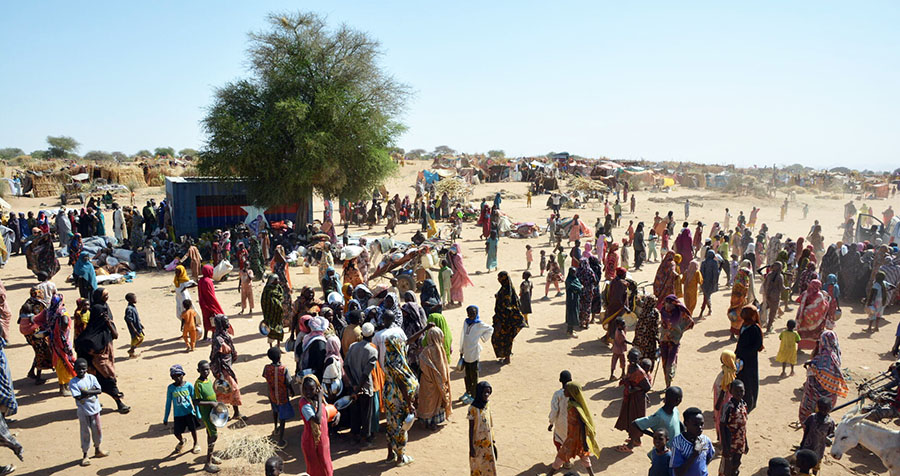
Vernier said that unofficial estimates indicate the presence of around 700,000 displaced people in Tawila alone, amid the absence of accurate records and major challenges to humanitarian access.
She noted that the number of people who left El Fasher after its fall was lower than expected, with no clear explanation—whether due to previous waves of displacement, widespread killings, or residents remaining in place awaiting new developments.
On Friday, the United Nations described the situation in El Fasher as “extremely horrific,” saying that around 100,000 people “remain trapped inside the city.”
Millions Displaced
Regarding the overall situation in Sudan, Vernier said the field situation does not inspire optimism in the near term, particularly in Darfur and Kordofan, where fighting remains intense.
Overall, she stated that the conflict ongoing since 2023 has displaced between 12 million and 14 million people inside and outside Sudan.
She added that around two million people are believed to have returned to their areas, most of them to the capital Khartoum, which has suffered widespread destruction of infrastructure and basic services.
She stressed that the return of residents to their areas requires extensive support to rehabilitate devastated cities that lack water, electricity, and health services.
The Largest Humanitarian Crisis
Vernier said that Sudan has moved beyond the phase of a purely humanitarian emergency and entered a stage that requires a comprehensive development-oriented approach.
She added that Sudan remains the largest humanitarian crisis in the world, calling on the international community to honor its pledges and support relief and reconstruction efforts, even amid the continuation of the conflict.
