
Updated: 1 December 2025 15:48:34
Women of Al-Gezira: Caught Between the Fire of War and the Stigma of Sudanese Society

Madani – (I’lamiyyat Network - Femal journalsts network) — During the military confrontations between the Sudanese Armed Forces and the Rapid Support Forces (RSF) in Al-Gezira State, women faced multiple forms of violence. Their bodies became battlefields—targeted by those who carry weapons and kill with bullets, and also by those who carry social restrictions and stigma, killing women with society’s bullets. Women died on the roads under enemy fire, and they died inside their homes under the fire of their families and loved ones—because a woman, in the eyes of many, has no value without “honor.”
Women paid the price of “the honor of war” at every stage. In this report, Madaniya News revisits the testimonies of women who survived the “War of Al-Gezira,” as they recount the violence they endured, the price they paid, and how society both failed to protect them and later blamed them for crimes they did not commit.
Starving Women
When A. left her village after hunger tightened its grip on her and her children, she went out simply to find food so they would not die before her eyes. But she could not find work, as the labor market was controlled by RSF forces, who imposed harsh conditions—appearance, ethnicity, and sometimes coerced sexual acts.
A. left home expecting nothing more than to work. She never expected to be used in looting. RSF forces opened shops and factories for women and forced them to steal: they opened oil and tahini factories for fair-skinned, curvy women, while allowing access to clothing or household stores—after stealing all valuable items—for women they considered “less beautiful” according to their standards of skin tone and ethnicity.
She did not expect to be forced to loot a store belonging to someone she knew well, but hunger left her no choice. When she finished, they gave her a sack of rice and ordered her to walk home on foot—because by their standards she “wasn’t beautiful enough” to be offered a ride. After walking for two hours while starving, she had to throw away the sack of rice just to be able to keep moving.
Forced Confinement and Unprotected Bodies
In Al-Gezira, many women who did not work outside were forcibly confined during the war. No woman could walk freely in her own village for fear of sexual violence. RSF fighters openly stated that violating women’s bodies was part of their “mission” in war—statements made in deeply conservative areas where even mentioning a woman’s name publicly is considered a grave offense, let alone threatening to rape her.
Women were confined indoors, leaving home only for urgent medical cases. When J. took her daughter to a clinic in a donkey cart as labor pains intensified, they had to travel long distances through farms and irrigation channels to avoid RSF checkpoints.
Her daughter endured the journey in pain, trying to avoid detection, but they were eventually caught. RSF fighters detained the men and searched the daughter, including her intimate areas, and told her they would take the baby once it was born. While her husband and uncle were distracted, J.’s mother was kidnapped in a pickup truck and taken to Khartoum. She managed to escape two days later, hidden inside a sack, before another armed group found her and released her, deeming her “too old to be of value.”
From Homes to the Wilderness: The Search for Impossible Safety
Kidnapping was another form of violence. Women were abducted from markets, homes, and along displacement routes. When villagers learned that RSF forces were approaching to loot, men gathered all the women into a large house, locked the doors, and left the village empty—enduring whipping or even death for hiding the women.
Women and children often slept outdoors for days—behind irrigation canals, in fields, among snakes and insects—to escape violence. Sometimes they spent the night in farms and returned home at dawn, but recently even homes became more dangerous than the open fields.
RSF fighters targeted wedding celebrations, kidnapping brides and young women as acts of ethnic revenge. They also followed girls to their homes, threatening families to hand them over. Many men died protecting their daughters from “disgrace.”
Wounds of War and Hearts Bleeding in Silence
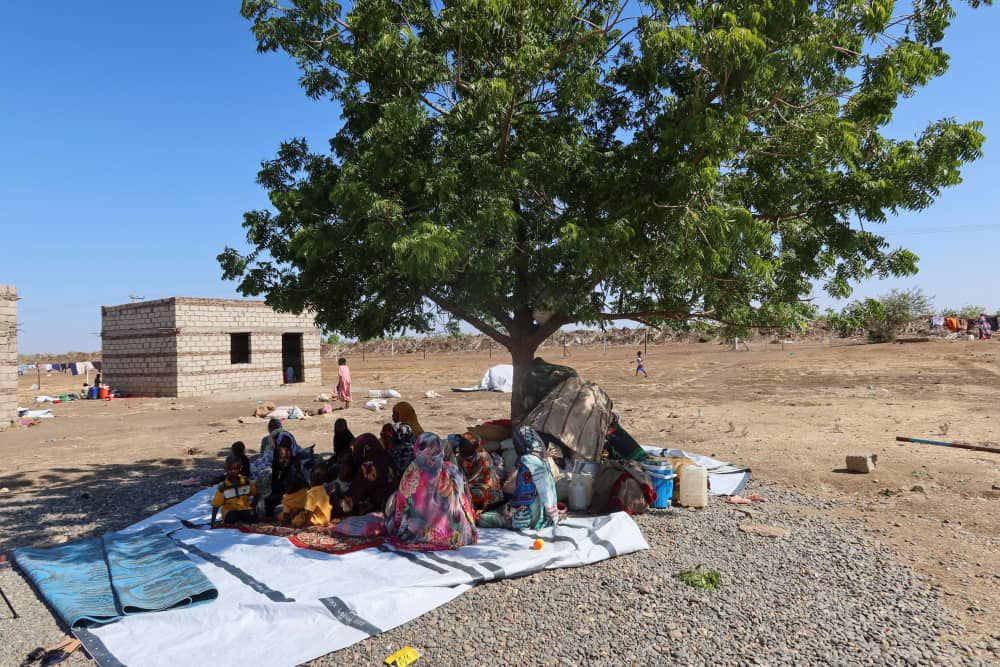
During displacement, women endured unimaginable forms of humiliation—from their homes to shelter centers. Many walked more than two weeks on foot after armed fighters stripped them even of their shoes.
They arrived at makeshift shelters unfit for women—suffering from deep foot wounds and deeper emotional scars. During these journeys, they faced hunger, sleeping under scorching sun, and rape in front of their children, husbands, and brothers—one of the RSF’s common methods to degrade women.
G. recounts how she was traveling with her children, her elderly mother, and her pregnant sister-in-law. After three days of walking, the sister-in-law went into labor while they hid in sorghum fields under heavy rain. She and her baby both died, and G. buried her with her mother and children’s help before continuing the journey—leaving a piece of their soul behind.
Three days later, her elderly mother collapsed and died. G. buried her too, with no choice but to keep moving.
Local Protection Mechanisms
Given the conservative nature of Al-Gezira, communities invented various methods to protect women during RSF control. Men often hid women in abandoned houses and blocked the doors with thorny branches to trick fighters into assuming the houses were empty. Families paid large sums of money to protect women from abduction, rape, and forced marriage.
Villages also used a whistle system (“al-suffara”) to warn women of RSF raids so they could hide under beds, in storage rooms, behind crop sacks, in latrines, or among trees and the riverbanks.
One common protection practice was gathering girls and women in “safe villages” or in the houses of tribal leaders and sheikhs—places RSF initially avoided out of perceived sanctity. But eventually, RSF fighters discovered these shelters, and even women in religious schools and worship spaces were not spared.
Death in Exchange for Honor
Despite the community’s protective efforts, these were driven primarily by fear of stigma. Men risked—and lost—their lives to prevent any hint of sexual violence against their wives or daughters. Many suffered severe psychological trauma from the constant fear that the “honor of the house” could be violated.
Because of stigma, women were denied gender-based violence support services and most mental health or reproductive health assistance. At refugee camps, men accompanied women to monitor them, ensuring they did not disclose what happened—policing their voices to protect “family and tribal honor.”
The same occurred during mobile reproductive health clinics or tent visits, where male relatives monitored aid workers to prevent women from speaking.
Extreme Social Punishment
The stigma denied many women the services they needed to restore their dignity. Pregnant survivors of rape faced harsher treatment: many families expelled them to avoid “scandal.” These women began endless cycles of violence—caring for children who constantly reminded them of their trauma.
Women who survived RSF assaults also faced hatred and violence at home, as if they were to blame for the crimes committed against them. Communities in safer states viewed displaced women from Al-Gezira as a threat—accusing them of “bringing immoral behavior” simply because they worked in jobs deemed socially “improper.”
Conclusion: The Long Road of Pain for the Women of Al-Gezira
At the end of this long road stained with tears and heavy shadows, the voices of Al-Gezira’s women remain witnesses to a war that not only destroyed homes and fields, but also shattered their spirits, dignity, and silence. Despite hunger, fear, burying loved ones along the roadside, and fleeing through farms to survive, the women of this land remain standing—cutting through the darkness with weary but unwavering steps.
Women in Al-Gezira paid the price of a war they did not choose. They gave more of their souls than human beings should ever be asked to give. And when they finally reached places where their wounds should have been met with care, they found themselves trapped instead by stigma and blame—tried without committing any crime, and shamed instead of consoled.
What they endured is not a temporary episode of war. It is a deep wound in the moral conscience of humanity—one that cannot heal through silence or denial. These women were not bodies to be violated, nor secrets to be buried, nor shame to conceal. They were—and remain—hearts alive with dignity, deserving of protection, justice, and full recognition.
For every woman who buried her mother on the road…
For every mother who carried her children on wounded shoulders…
For every survivor who was kidnapped, shamed, or silenced…
It is the responsibility—legal, moral, and human—of society, the state, and international organizations to open the doors of justice, lift the stigma, and stand with them—not only as victims, but as survivors capable of rewriting their destiny when given safety and dignity.
War may take much, but it has not extinguished the light within these women—a light that continues to shine through the pain, declaring that no peace is meaningful unless the wounds of women lead the way to justice.
- The Sudan Media Forum and its member outlets publish this report, prepared by the I’lamiyyat Network - Femal journalsts network, to reflect some of the consequences faced by women in Al-Gezira, one of the fiercest battlegrounds between the Sudanese Armed Forces and the Rapid Support Forces. The report documents the tragedies endured by women who survived RSF abuses, as well as those who suffered violence and stigma from their own communities simply because they were victims of war at its most brutal and lawless.
