
Updated: 27 November 2025 17:36:22
PAX: How trade in gum arabic fuels conflict in Sudan
Moatinoon
A report published on November 2025 by PAX provides a detailed and troubling analysis of how Sudan’s gum arabic—one of the world’s most widely used natural additives—has become deeply entangled in the country’s war economy. Once a lifeline for millions of rural families, the gum arabic sector has evolved into a lucrative source of revenue for armed groups, especially the Rapid Support Forces (RSF), through looting, forced taxation, and extensive smuggling networks.
Gum arabic: global necessity, local vulnerability
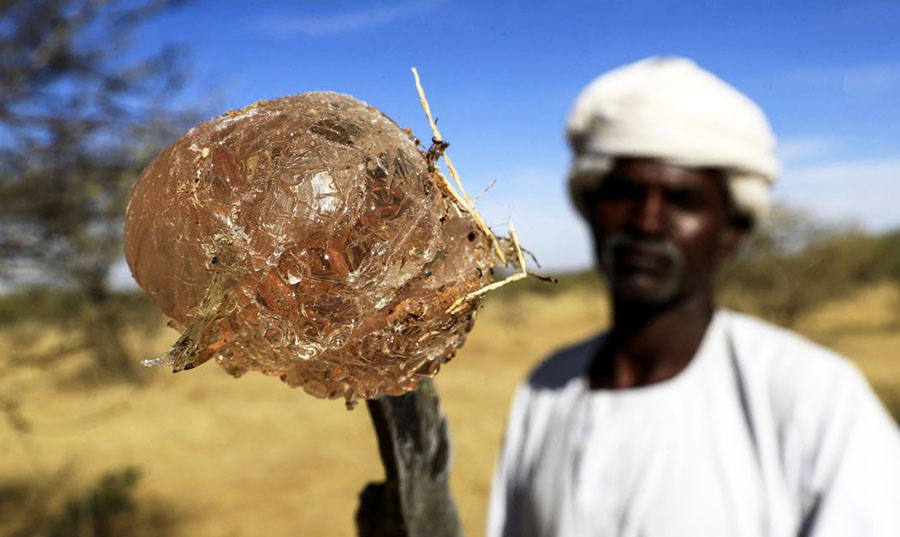
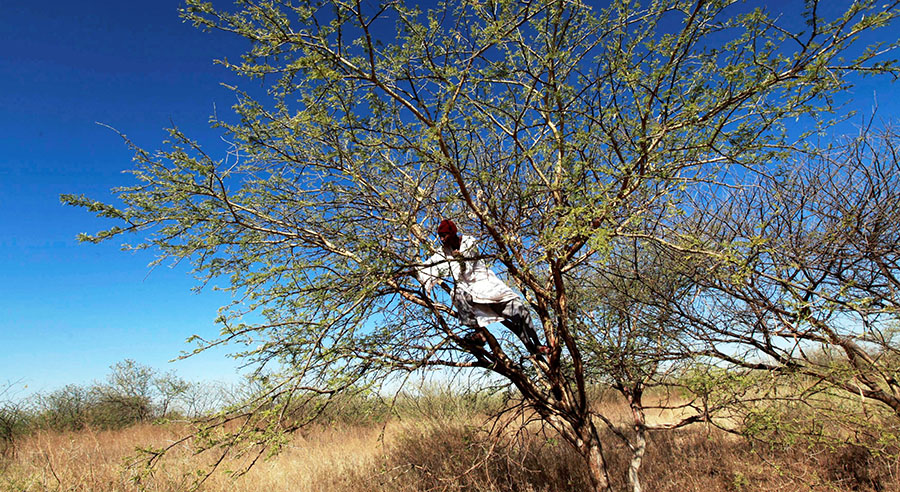
Gum arabic, derived from Acacia senegal (hashab) and Acacia seyal (talha), is indispensable in food and beverage production, pharmaceuticals, cosmetics, and countless industrial applications. It is used in soft drinks, candies, chocolates, medicines, and personal-care products
Sudan has traditionally held a dominant position, producing 70–80% of global supply before the war.
The conflict between the Sudanese Armed Forces and the RSF—described by the UN as the world’s largest humanitarian crisis—has devastated civilian life, with over 150,000 people killed and more than 12 million displaced. Within this turmoil, access to valuable natural resources such as gum arabic has become central to the warring parties’ strategies for financing and territorial control.
RSF control and systematic predation
Most gum-producing areas in Kordofan and Darfur have fallen under RSF control. The report documents extensive looting: RSF fighters seized thousands of tons of gum from warehouses, including 3,000 tons from Afritec facilities. Local traders confirmed that tens of thousands of tons have been pillaged since the conflict began, often with RSF commanders encouraging looting as compensation for their fighters.
Transporters face harsh extortion: RSF checkpoints impose fees between USD 500 and 2500 per truck, in addition to “zakat” charges. Those who refuse risk losing their cargo—or their lives
These predatory practices have transformed the sector into a militarized economy where production, pricing, and transport are dictated by armed actors.
Smuggling routes through the region
With formal export systems collapsing, smuggling has expanded dramatically. Gum arabic now flows through Chad, South Sudan, Egypt, Libya, and the Central African Republic. The report estimates that 50,000–70,000 tons cross from RSF-held areas into Chad annually, with another 30,000–40,000 tons heading toward Libya and Egypt
Once across the border, the gum is often relabeled as local production, masking its Sudanese origin. Traders in Chad and South Sudan openly acknowledge that they mix Sudanese gum with local output, making traceability nearly impossible. This allows international buyers to import gum arabic without confronting its conflict-linked provenance.
European dependence and corporate opacity
European processing companies—particularly France and Germany—dominate the global gum arabic industry. Firms such as Nexira, Alland & Robert, and Wolff collectively control the majority of global processing capacity. Despite corporate declarations of “responsible sourcing,” interviews with traders and observers suggest that companies cannot reliably guarantee conflict-free supplies.
Several European buyers have increased their purchases from neighbouring countries like Chad since the war began. Yet according to Sudanese experts, most gum exported from these countries originates in Sudan and passes through RSF-controlled routes. Local traders report that “all gum is smuggled” and that certification is often impossible to obtain.
Corporate associations such as the AIPG deny financial links between members and armed groups, but they admit they have no independent means to verify supply origins
Weak enforcement of due diligence laws
European due diligence mechanisms—including France’s Loi de vigilance and Germany’s supply-chain law—are highlighted as insufficient in conflict settings. While laws require companies to assess and mitigate human-rights risks, large multinationals such as L’Oréal have failed to mention Sudan or gum arabic in their vigilance plans, despite credible evidence of conflict-financing risks.
The report warns that proposed amendments to the EU Corporate Sustainability Due Diligence Directive (CSDDD) would severely weaken protections by limiting obligations to first-tier suppliers and raising size thresholds—meaning that sectors like gum arabic would fall outside regulatory scrutiny.
Conclusion
The report concludes that gum arabic is now a central node in Sudan’s war economy and that European consumers may unknowingly be supporting armed groups through everyday products.
It calls for robust, mandatory due diligence; independent audits; transparent supply chains; and conflict-sensitive procurement policies to ensure that the trade does not continue to fuel violence. At the same time, it stresses the need to protect the livelihoods of millions of Sudanese farmers who depend on the crop.

