
Updated: 23 November 2025 16:28:52
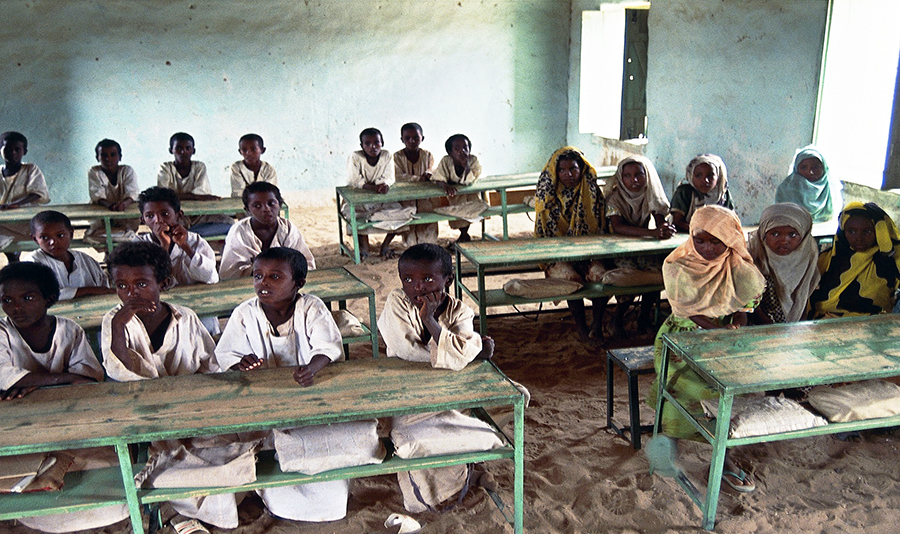
War Turns Education in Sudan into a Weapon Against the Next Generation
Moatinoon
A new analytical report published in Atar Weekly Magazine issue (102) on 20 November 2025 reveals the deep collapse of Sudan’s education sector, showing how schools and universities have shifted from being institutions of learning and development to battlegrounds for political legitimacy between two warring military authorities—while millions of students pay the price.
A Historic Breakdown of the Education System
The report traces the current crisis to decades-old policies that entrenched inequality between wealthy and marginalized regions. During the 1990s, the government dismantled university autonomy and rapidly expanded higher education without adequate funding. This created a deeply unequal system in which access to quality education increasingly depended on financial capacity rather than academic merit.
Additionally, transferring responsibility for basic and secondary education to underfunded local governments widened regional disparities. Public schools, once free or nearly free, began imposing fees for enrollment, examinations, and school supplies, while only affluent states could maintain functioning education services.
Revolution, Pandemic, and Coup: A Triple Blow
Sudan’s students endured severe disruptions during the 2018–2019 revolution, the COVID-19 pandemic, and the 2021 military coup. Many university students—especially in public institutions—took seven to ten years to complete five-year programs. After the April 2023 war, millions lost all access to schooling, while university records were destroyed and entire campuses rendered unusable.
Education Becomes a Battlefield Between Army and RSF
The report highlights how education is now weaponized as both the Sudanese Armed Forces (SAF) and the Rapid Support Forces (RSF) use schools and educational administration to project legitimacy.
In RSF-held areas: the university system has almost entirely collapsed. Learning is limited to small groups of students with internet access, taught by lecturers living in extremely harsh conditions.
In SAF-held areas: universities continue operating at a minimal level, but fees have skyrocketed. At the University of Khartoum’s Faculty of Medicine, fees have reached 25 million Sudanese pounds, far beyond the means of most families.
Meanwhile, many states have stopped paying teachers for months, and schools have been converted into shelters for internally displaced families.
A Threat to the Country’s Future
The report warns that current policies risk normalizing a neoliberal model in which the state withdraws from funding education entirely, leaving communities to carry an impossible burden. This would lead to the collapse of the entire system and rob a generation of Sudanese children and youth of their right to learn.
The study stresses that defending education requires strong, collective pressure from Sudanese communities, who must demand public investment and protection of schools and universities as essential pillars for the country’s political and social future. Without such action, the war may dismantle not only present opportunities but the very possibility of a democratic and educated society.
