Updated: 22 October 2025 22:31:49
Anomie and the Anemia of the Sudanese Media Discourse in Wartime
Amir Babiker Abdalla
"In times of war, lies are manufactured before bombs are."
Noam Chomsky
"The more the spaces for public discussion narrow in wartime, the greater the danger of democratic rationality eroding."
Jürgen Habermas
"War transforms the media from a tool for information transfer into a symbolic battlefield where the legitimacy of power is managed."
Manuel Castells
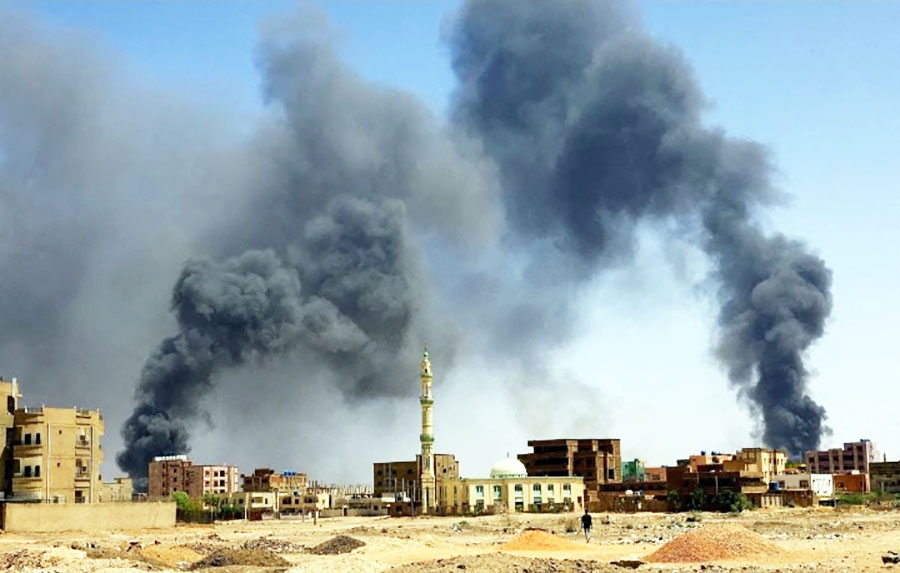
With the relentless shelling and aerial bombardment and the collapse of buildings and infrastructure due to the ongoing war among the Sudanese, values have simultaneously collapsed and the standards that represented a bond regulating societys movement have dissolved along with the scattered bodies on the streets.
This state of social normative and value regression is called "Anomie" in sociology. It is a term and concept coined by the French sociologist Émile Durkheim in the late 19th century.
It has been agreed upon to define it as a state of instability or a state of turmoil and anxiety among individuals due to the collapse of social norms and values, or the lack of purpose and ideals. In other words, it refers to a state of "normlessness" or "absence of rules" in society.
According to "Arab Socio blog," the state of anomie occurs amidst the organizational breakdown of societys institutions and the collapse of standards, the disconnect between declared social goals and the legitimate means to achieve them, and the blatant contradiction between what is circulated as official ideologies and what is happening on the ground.
Psychologically, one feels alienation, absurdity, and moral decay, which negatively reflects as isolation and deviance.
In short, the saying, "The Sudanese war, ongoing for more than two and a half years, has shown the worst in us," is a practical, applied definition of what has become known as "Anomie".
What prompted me to address this phenomenon is the horrifying collapse of standards and values I observed in media discourse after the outbreak of the war on April 15, 2023. Before that, discourse devoid of societal values and norms was read within different frameworks; even that which was characterized by hatred and racism appeared timidly when it leaked from within private gatherings and closed rooms.
With the state of weightlessness we, or at least I, have been living in since the war began, I exert effort to help me endure, so that I do not dwell too much on social media platforms and the scum they broadcast.
Nor do I dwell on many journalistic writings by well-known writers who have been significantly affected, or rather, the phenomenon of "Anomie" has succeeded in trapping them and exposing the low-city residing within them.
One of the features of "Anomie" is the recourse of individuals to deviant behaviors, unless organized entities are behind these behaviors. In wartime, social life becomes unstable and full of conflicts due to the weakness of social control authority.
The arenas of redemption on social media platforms, specifically TikTok and Facebook, witnessed the collapse of the value system whose thread had held sway.
We saw intellectual and verbal depravity at its peak, as if the war had opened a beehive to fill the space with poisoned stings instead of producing health-benefiting honey.
We saw the world of Qunat (female singers/performers) in image and sound, that world which appeals to our fragile insides.
And they managed to attract to their world, Qunat and Aqwan (male singers/performers), if the term is permissible, from the world of journalism and "the word that was in the beginning".
Because it is associated with the loss of shared moral and social rules power in regulating individual behavior, and consequently the individuals feeling of being lost, futile, and uncertain about their role and goals in life, it leads to social disintegration and the weakening and fracturing of the bonds that unite people in a functional society, according to the structural functionalist theory associated with names like Émile Durkheim and Herbert Spencer, and developed in the twentieth century by the works of Talcott Parsons and Robert K. Merton.
I stopped only twice at the writings of two individuals with whom I have a very special relationship, and I realized that the war had taken its toll and no one was safe from the phenomenon of "Anomie".
And I decided to intervene.
The second instance was about a month or more ago when I read a post by my niece on her Facebook account.
She is an active and religiously committed person; I saw her wearing the Niqab when she was 10 years old, which was her choice of path.
She is also hardworking to increase her small familys income since giving birth to her first child years ago.
I found her commenting on a screenshot of an inappropriate message sent to her by one of her e-marketing clients. She responded by trying to match her tone, seeking her friends support in her sharp criticism of the client.
This is a general state in the world of "trends" and "show" in the Facebook spheres.
Knowing her committed and strict religious background, I commented on the same post, writing, "My niece, be as the Quranic verse says, And the servants of the Most Merciful are those who walk upon the earth easily, and when the ignorant address them [harshly], they say [words of] peace.".
Since then, I havent seen her post circulating on the timeline. I was certain that the message had reached her.
The second was more concerning when my eyes fell on part of an online debate, on electronic platforms, between Professor Adil Al-Baz and the late Al-Bagir Al-Afif more than a year ago.
In truth, I did not read what Al-Bagir Al-Afif wrote that provoked those responses, which I did not read all of, from Adil Al-Baz.
And because I am not connected to the late Al-Afif, but there are ample shared spaces between me and Adil Al-Baz that made me intervene and address him with severe reproach for the level of discourse he had descended to, he reluctantly accepted my opinion, but unfortunately, he did not stop, as I noticed without following up. I realized then that the cancer of "Anomie" had begun to spread in unimaginable areas.
I know for certain that Adil Al-Baz is an Islamist, but I know what the Kizan (Islamists) did to him, which forced him to shut down his newspaper, "Al-Ahdath," at the peak of the Kizan-Kizan conflict at the time.
According to my classification, a Kuz is not necessarily an Islamist, just as, conversely, not every Islamist is a Kuz.
The Kuz is one of the most prominent manifestations of the "Anomie" phenomenon.
According to Durkheim, "Anomie" usually appears during periods of great and rapid social change. For example, during periods of economic depression or recession, people quickly lose their jobs and wealth, and the usual expectations about material success and social status collapse.
This sudden breakdown of economic norms can lead to a rise in suicide rates and deviant behavior.
Similarly, rapid and unrestricted material growth can raise individuals ambitions without limits, uncoupled with moral and social controls, thus creating a sense of perpetual dissatisfaction and a constant need for more, which is a form of normlessness.
The sociologist Robert K. Merton, in his Strain Theory, views "Anomie" as the strain that drives individuals, especially the socially deprived, to adopt deviant behaviors to achieve goals like wealth and material success.
"Anomie" is also manifested in organized crime and fraud. Some may resort to theft, corruption, and fraud as illegitimate means to reach goals they failed to achieve due to the lack of fair employment opportunities or good education for all.
It can also be manifested in individuals feelings of frustration and loss of faith in both goals, such as: "success doesnt matter," and means, such as: "theres no point in working hard", which pushes them to withdraw from society (like someone who uses drugs or becomes homeless).
War and the Phenomenon of "Anomie"
Here, a distinction must be made between two types of war. The first is war between states, a situation that naturally necessitates the cohesion and unity of the internal front.
As I always cite the saying of Montgomery, the British military commander, that you cannot win a war unless you unify your internal front. He is speaking here about war between states.
It is natural for the discourse to be unified in the case of war between states, as state institutions, whether here or on the other side, can control the media discourse that defends the state, either through the leverage of nationalism or ideology. This applies to the saying, "No voice is louder than the voice of the battle". What we see and follow, for example, in the tensions between Eritrea and Ethiopia and their effect on the reciprocal media discourse, is evidence of this.
Perhaps one of the most prominent consequences of the internal fronts division in a war between states is what happened in the Vietnam War. In addition to other influential factors, the internal division and popular protests against the war ultimately led to the horrifying defeat suffered by the American army, with all its might, in that war.
As for internal war, its conditions and circumstances are different. One of its most prominent features is the division of the internal front because it is taking place among the people of the same nation.
Ibn Khaldun says in the Muqaddimah – Chapter Three: "If Asabiyyah (group solidarity) deviates from its lineage, its corruption is faster". If Asabiyyah splits, the state collapses, and with it, chivalry is lost, and people become factions and parties, and values decline.
Many contemporary sociologists agree with Ibn Khalduns proposition that wars lead to the erosion of societies value systems.
Other than Émile Durkheim, who sees that wars cause what he calls "Anomie", Max Weber adds that war produces an "instrumental rationality" that replaces "value rationality," as principles recede in favor of utility and power.
As for Zygmunt Bauman, he points out in his book Modernity and the Holocaust that collective violence does not only abolish values but also reshapes them to justify killing and marginalization in the name of order, security, or national purity.
Likewise, Pierre Bourdieu believes that war causes "symbolic violence" that makes cultural hegemony justified as a national or religious duty, which leads to the production of a media discourse that contributes to legitimizing hatred.
Jürgen Habermas, on the other hand, suggests that the collapse of values during wars is a result of the collapse of the "public sphere," meaning societys loss of the capacity for free moral and rational discussion.
Anthony Giddens adds that globalization and digital media networks have made modern wars a fertile environment for the dismantling of shared values through the continuous broadcasting of images of violence and fear, which leads to the "normalization" of cruelty in the collective consciousness.
As a result of the anemia that has afflicted the media discourse due to the state of "Anomie", the war in Sudan has created a state of social disintegration and normlessness manifested in the collapse of state authority and legal standards.
The current war has revealed the disintegration and collapse of central state institutions, especially the security and judicial agencies.
This collapse weakens the ability of law and formal standards to regulate behavior, thus plunging society into a state of "absence of rules" in the Durkheimian sense.
Furthermore, the spread of crimes and looting has increased in the absence of the rule of law, with a rise in deviant behaviors such as armed robbery, theft, and grave human rights violations.
Survival or accumulating wealth has become a goal that justifies the use of illicit means, which is a clear example of the criminal anomie described by Merton.
The internal war has led to the disintegration of the social fabric, moral values, and the erosion of societal trust.
Armed conflict sows doubt and fear among individuals and groups, especially amidst targeting based on ethnic or tribal grounds, which leads to the disintegration of the social bonds that unified society, and the replacement of solidarity with isolation.
The war has distorted humanitarian standards and exposed horrific practices such as identity-based killings and the documentation and publishing of crimes on social media, indicating that fundamental ethical standards, such as the sanctity of human life and dignity, have been distorted and eroded in conflict zones.
The war has shifted priorities, placing survival at the top of the ladder while morality has receded to the bottom, as the humanitarian crisis and famine have forced individuals to change their priorities.
The search for resources to satisfy hunger becomes more important than adherence to traditional moral standards.
Despite the significant role played by the emergency rooms (mutual aid groups) in preserving the social legacy and the values of mutual support and solidarity, their effect often remains limited.
The states of displacement and refuge have led to individual "Anomie" and a feeling of despair. When people are uprooted from their familiar social environments and their relationship networks organized over long years, they inevitably feel lost and lose a sense of belonging.
This is especially true with the parallel collapse of the educational and economic system and the destruction of cities, which has generated a sense of despair and lack of a clear future among an entire generation.
This is an environment where the risk of resorting to aggression or self-destructive and socially destructive behaviors increases.
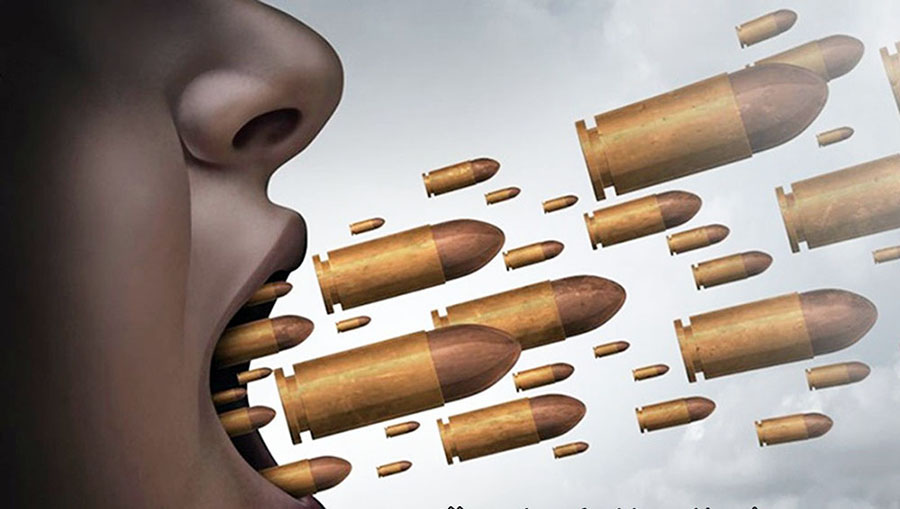
Since the media plays an important and fundamental role in such circumstances and is immersed in war narratives in all its forms, the anemia that has afflicted its discourse has made it submerged in the whirlpool of "Anomie", often lacking societal values and norms under different and fabricated pretexts to suit and blend with the current situation.
In this context, Noam Chomsky argues that "The media does not just cover the war, it symbolically creates it by defining who the victim is and who the perpetrator is", pointing to the justificatory role played by media institutions in serving the interests of political and military powers.
Jürgen Habermas warns that the narrowing of public discussion spaces during wars leads to the "erosion of democratic rationality" and the retreat of critical journalism.
Thus, war produces a media discourse charged with emotions and ideology, aiming to control collective perception and manufacture a collective memory that reinterprets the past to justify the present, as described by Maurice Halbwachs.
Therefore, what the war has caused is an enormous social shock that has led to a widespread value and normative vacuum, which reflects the essence of the Anomie phenomenon described by Durkheim.

