
Updated: 22 October 2025 09:06:04
The Prospect for Justice in Sudan: An Interview with ICTJ’s Ilaria Martorelli
Source: ictj.org
When monthslong peaceful protests led to the ouster of President Omar al-Bashir in 2019, peace and justice seemed possible for the first time in Sudan after decades of brutal dictatorship and conflict. The country embarked on a process of transition to civilian rule, which included the establishment of a transitional government with a cabinet led by a civilian for the first time in 30 years and a comprehensive peace agreement aimed at addressing the root causes of the country’s multiple conflicts.
In October 2021, the military seized control in a coup d’état and abruptly ended the country’s nascent transitional justice process, ushering in a new period of instability and human rights violations. Less than two years later, in April 2023, conflict broke out between the Sudanese Armed Forces and the Rapid Support Forces (RSF) militia in the capital, Khartoum, which quickly engulfed the rest of the country.
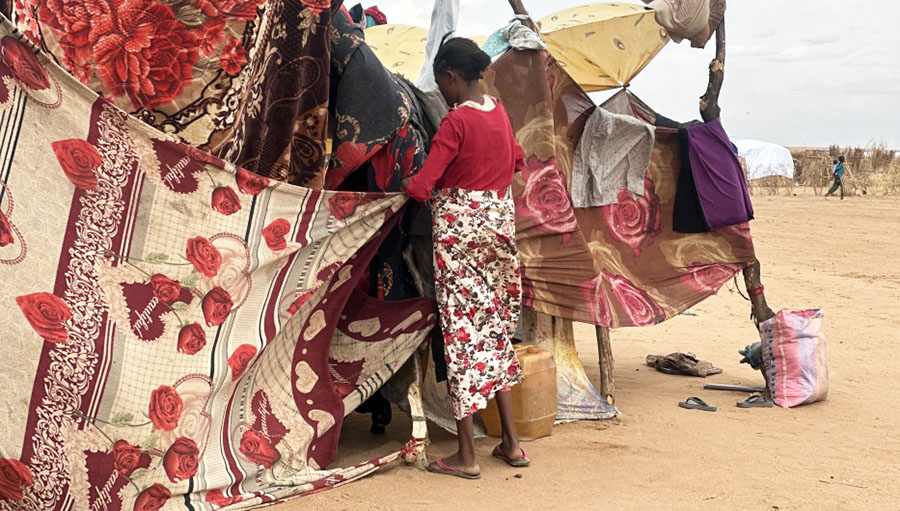
As a durable ceasefire eludes international mediators time and again, the conflict continues to ravage the country and has created the worst humanitarian and displacement crisis in the world. Currently, more than 30 million people are in desperate need of humanitarian aid, and nearly 13 million have been forced from their homes. Both sides stand accused of committing human rights violations and war crimes, though the RSF has potentially committed crimes against humanity including genocide in the Darfur region.
Despite the enormous challenges, Sudanese civilians are prioritizing transitional justice, acknowledging the need to address past injustices to stop the cycle of conflict in their country. ICTJ continues to collaborate with Sudanese civil society and other stakeholders to help them envision and design victim-centered, gender-sensitive, and inclusive strategies that will lay the groundwork for sustainable peace and justice. Leading these efforts is Ilaria Martorelli, the head of ICTJ’s Sudan program. She recently sat down with communications intern Karsten Rynearson to discuss both the obstacles and unique opportunities for transitional justice in Sudan as well as the real prospects for lasting peace, accountability, and repair.
Karsten Rynearson: ICTJ’s work in Sudan began in the wake of the 2019 revolution, during which massive street protests led to the ouster of President Omar Al-Bashir, ending three decades of dictatorship and sparking widespread optimism for a democratic transition. What steps were taken toward a transition at the time, and what role did ICTJ play in them?
Ilaria Martorelli: Sudan has essentially been in a state of conflict since gaining independence in 1956. Authoritarian regimes and serious human rights violations have been present for decades. Meanwhile, there has never been a comprehensive revision of the social contract since Sudan’s establishment, nor a credible attempt to address structural injustice. The vast ethnic diversity in Sudan has also not been managed constructively. These failures lie at the heart of the cycle of violence that has been witnessed in Sudan both before and after the transition.
When the transition began, ICTJ’s objective was to encourage comprehensive justice with a victim-centered approach. It was crucial to strengthen the capacities of newly established institutions and create space for inclusive conversations between them and civil society organizations. There was no tradition of dialogue between institutions and civil society in Sudan, precisely because of the decades of military dictatorship. To address this, we provided the transitional authorities with technical assistance and trained over 336 civil society leaders and victims from all 18 states in Sudan in key concepts and best practices in transitional justice. Care was taken to ensure that the training reflected Sudans geographic, ethnic, and gender diversity.
Karsten Rynearson: This transitional period was short lived. The Sudanese military seized control of the government in 2021, effectively ending the country’s nascent transitional justice process. What lessons can be drawn from this period, particularly with regard to any future process in Sudan?
Ilaria Martorelli: Firstly, it is critical to fully understand the context, by which I mean the risk and the opportunities and the various stakeholders in the process. This may sound obvious, but it really requires time and attention.
The second lesson is to understand the nuances. Because various conflicts have broken out in Sudan, justice needs can vary considerably from one region to another. It is essential to consider their specific history.
Thirdly, transitions take time. Sudanese civilians have faced decades of authoritarian regimes and conflicts, meaning the process is more complex than usual. This does not mean that one should wait for the ideal conditions to begin a transitional justice process, because it’s very rare that perfect conditions exist as soon as a transition begins. It is more about understanding appropriate sequencing across contexts and identifying openings to begin pushing justice and redress forward.
Of course, capacities have to be built. That’s why it takes time, because windows of opportunity may vanish, and spoilers are always ready to try to derail the process. This was the case with the transition in Sudan, which we should remember lasted only two years, nowhere near enough time for meaningful change. There is a readiness now in Sudan for a transition process to begin. There is a strong network of capable partners that are willing to lead that process in an inclusive way.
Another important lesson is unity in diversity. Transitional justice strategies need to be discussed even when trust is low, and among people that bring different perspectives and come from different regions. For civil society to be able to lead a civilian transition, they need to be able to manage those differences and find unity of purpose in their diversity.
Karsten Rynearson: Since the 2021 coup, and the subsequent outbreak of civil war in 2023, how has ICTJ adapted to the shifting realities on the ground? How have ICTJ’s mission and activities in Sudan changed?
Ilaria Martorelli: Thanks to a thorough mapping of actors and a nuanced understanding of stakeholders, we were able to continue our work even after the October 2021 military coup. We had to demonstrate a high level of organizational agility and strategic flexibility in order to adapt our priorities to the context. We also performed a risk assessment and updated it regularly to identify opportunities and threats on the ground. As a result, we were able to hold five regional workshops, with the 340 or so participants reaching more than 1,000 people in all 18 states, including areas that are difficult to access.
After the war, we moved our operations to Kampala, Uganda. There, we were able to reach key stakeholders, including refugees from various political backgrounds. This ensured the inclusivity that is so important to our work and to any transitional justice effort in Sudan.
We needed to reestablish our network and conducted a series of foundational workshops covering vital topics such as institutional reforms and gender justice, which is a particularly critical issue in Sudan.
Karsten Rynearson: The war has devastated the country and created the worst humanitarian and displacement crisis in the world. No one in Sudan—including the civil society actors who are leading these efforts for justice, accountability, and repair—has been spared from the wars dire consequences. How does ICTJ support civil society actors in their work, when for many humanitarian relief is top of mind?
Ilaria Martorelli: The humanitarian crisis in Sudan has been described as a crisis of epic proportions. Famine has been declared in several regions. As a result, humanitarian support is crucial. However, the situation will not improve without a ceasefire and a comprehensive, inclusive, credible, and victim-centered peace process.
Despite the immense humanitarian needs, it is striking that victims and other civil society representatives have remained steadfast in demanding justice, considering it a top priority. Sudanese people are convinced that comprehensive transitional justice is the key to breaking the cycles of violence that have caused the dire humanitarian crisis they are experiencing.
Karsten Rynearson: Given the enormous challenges in pursuing any formal transitional justice process in Sudan at this time, what other approaches are available to preserve victims’ testimonies and advance justice and accountability?
Ilaria Martorelli: In our workshops, we facilitate discussions on documentation and trauma-informed approaches to engage with victims. We will soon conduct a workshop on open-source investigations to build the skills of activists documenting violations and discuss how they can apply those skills to advance justice. To date, we have trained over 50 journalists to advance transitional justice and documentation in their work.
Art has always been a part of our work as well. We never end a workshop without a participant offering to sing a song expressing the suffering and hopes of the Sudanese people and helping participants feel united by the melody. Art plays an important role in strengthening the Sudanese people and fostering a sense of unity among them. We are undertaking artistic activities dedicated to preserving the memories of victims and their testimonies and engage viewers in transitional justice discussion.
Karsten Rynearson: The Sudanese conflict has been especially devastating for women with combatants on both sides targeting them. How is ICTJ working to address conflict-related sexual and gender-based violence?
Ilaria Martorelli: Gender is central to our approach. We work with a variety of Sudanese stakeholders to promote societal change after decades of discriminatory and draconian rules that have specifically harmed women and girls in Sudan. Some promising institutional reforms were initiated during the transitions of 2019 and 2021, including amendments to the penal code concerning female genital mutilation. Unfortunately, the war overturned that progress.
Together with our partners, both men and women, we explore global best practices to address gender-based discrimination in education, legislation, society, religion, politics, and the economy. We conducted a stakeholder analysis to identify those with the power and will to address gender injustices and determine how to engage them in our work. However, much work remains, and we must collaborate to promote lasting change.
Karsten Rynearson: Tom Fletcher, the UN Under-Secretary-General for Humanitarian Affairs, has described Sudan’s humanitarian situation as an “invisible crisis,” referring to the relatively low level of media coverage that it receives. Why do you think the media isn’t paying more attention? What impact does it have on the peace process and humanitarian crisis?
Ilaria Martorelli: I would like to distinguish between international and national media. In my view, the international media is not providing adequate coverage of the tragic situation in Sudan likely due to competing geopolitical priorities. Furthermore, international journalists lack access to war zones, making it difficult for them to accurately report on the extent of the crisis in Sudan.
As for local media, they face issues of both access and capacity. In our work, we focus on journalists because of their critical role in shaping popular understandings of the situation in Sudan.
This poor coverage has resulted in a lack of global understanding of the scale of the unbearable suffering that the Sudanese have endured. Consequently, there is no proportionate push from the global public for a political solution, precisely because very few people are aware of the extent of the crisis.
Karsten Rynearson: To end on a more hopeful note, what do you see as the greatest opportunities for peace and justice in Sudan in the present moment?
Ilaria Martorelli: The situation is very dire, but there are glimpses of hope. Transitional justice is now at the center of the political discourse. This provides an opportunity to address the factors that have been at the root of this chronic instability in the country.
Another glimpse of hope is the resilience of Sudanese people. How vocal they are in demanding justice, and also their deep love for their country and for their culture. This is what is keeping them inspired in their fight, despite all the obstacles that they are facing. Before we started working in Sudan, victims resisted even discussing transitional justice. Now that they understand the nuances, they are more willing and better equipped to advance their rights in the process.
Of course, the International Criminal Court’s recent conviction of Ali Muhammad Ali Abd-Al-Rahman, the former Janjaweed militia leader, on 27 counts of war crimes and crimes against humanity committed in Darfur is also very encouraging. Nearly 1,600 victims took part in the court proceedings. The landmark verdict shows that, even after years of suffering and silence, justice can prevail, and that accountability, even though long delayed, remains within reach for those who persistently strive for it.
But as we all know, only inclusive political solutions bring durable peace. Despite divisions and a lack of trust, there must be the ability to sit and discuss, engage in dialogue, and negotiate a shared vision for the country, even with the people that we don’t fully trust. This is what democracy is. It is very difficult when the suffering is as profound and layered as it is now, and when insecurity is so pervasive. But having that vision readily in mind should inspire Sudanese to call for an inclusive peace process, and to have the hard conversations that are required for it to happen. Ultimately, progress will depend on the sustained pressure of the people, and the support that they will receive from all of us in the international community.

