
Updated: 9 September 2025 12:52:21
Money Without Community: The Hijacking of Social Responsibility in Bawga
Investigation: *
At dawn on June 12, 2024, the quiet streets of Bawga turned into a battlefield of chases and clashes that culminated in the arrest of Wad Ahmed Ali and a number of local community leaders. This was not just a passing security incident; it was an explosion of pent-up anger that had been accumulating for years.
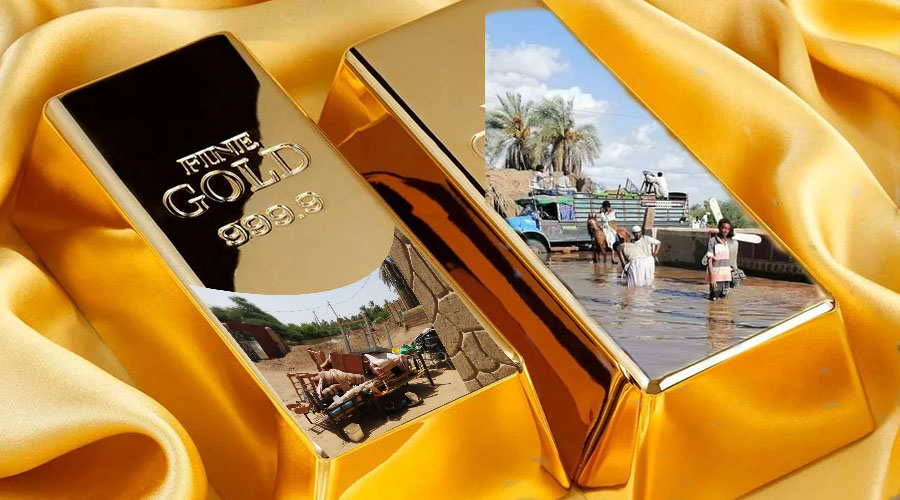
Behind the sounds of gunfire, a bigger question looms: Where did the social responsibility funds that mining companies had promised to allocate to the regions development disappear? While tons of gold were transported daily from the Nile River to state and corporate coffers, residents remained deprived of the most basic services: qualified schools, advanced hospitals, and potable water.
A Tool of Control
Under ousted President Omar al-Bashir, the concept of social responsibility was transformed into a tool of political control, with funds disbursed through the ruling partys fronts, devoid of any accountability. Journalist Musab Abdul Jabbar asserts that "what was called social responsibility was nothing more than a cover for a corrupt administration serving the interests of the National Congress Party."
On the ground, the locals saw nothing of the billions announced by the Sudanese Mineral Resources Company. The promised projects either stalled or were implemented in a sham manner, while the villages remained mired in poverty. When residents attempted to protest, they were met with security violence, before pressure forced some military-affiliated companies to pay annual financial contributions that ultimately did not reach the local community.
With the fall of the Bashir regime, a new window appeared to open for local communities. In Bawga, Berber, and Abu Hamad, residents elected committees by mutual consent to manage the mining file, and for the first time, their voices were heard by the Ministry of Minerals and the Sudanese Mineral Resources Company.
During this period, the National Mining Conference convened in Khartoum, recommending that 10% of gold revenues be allocated to producing communities. This percentage was later reduced to 4% by Resolution 90 of November 2021. Nevertheless, the resolution was considered a historic achievement because it recognized, for the first time, the locals right to a share of their wealth.
Under the management of these elected committees, small, tangible projects emerged: providing ambulances, maintaining schools and water stations, and rehabilitating some health centers. “After the revolution,” says activist Amir Ammar, “for the first time, we felt that the gold money was returning to us. It wasn’t enough, but it was a start.”
Unchecked Accounts
But hope did not last long. With the October 2021 coup, the elected committees were dissolved, and the authorities reappointed members linked to the former regime. Under Decree 90, social responsibility funds were transferred to local government accounts, granting executive directors the authority to dispose of them as public revenue. Thus, the Ministry of Finance regained control over gold resources, and projects launched during the transitional period were halted.
Journalist Musab Abdul Jabbar says that the exploitation of Decree 90 turned development funds “into a tool in the hands of local governments, transformed into official accounts without oversight, and transparency was completely absent.” The result: the continued absence of basic services and the accumulation of corruption.
In the face of these accusations, the Sudanese Mineral Resources Company defended its policies. Its former director, Mubarak Ardol, explained that River Nile State received more than 15 million in 2020, in addition to community projects exceeding 500 million pounds, and a balance of approximately 800 million pounds deposited in the Central Bank of Sudan. The company asserts that disbursements are made through five-member committees that include representatives of the local community.
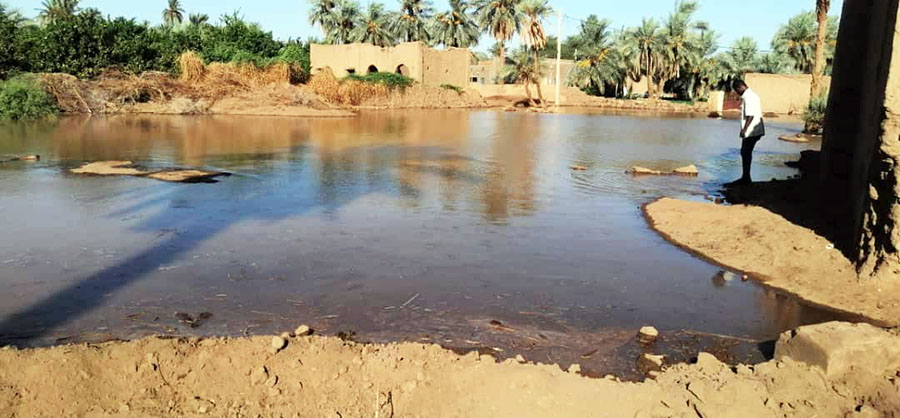
However, conflicting statements have further complicated the situation. In August 2022, during the floods that devastated villages in the state, Burhan directed that community responsibility funds be used to rebuild villages, while Governor Amna al-Makki denied receiving any funds. In response, Hemedti called on residents to demand their rights to these funds, asserting that they "are sufficient to rebuild the villages," but only on the condition that their spending is reviewed.
The matter became more ambiguous when Ardol himself admitted that 50% of the funds are allocated to the senior leadership, 30-50% is spent by the company, and the states share does not exceed 20%.
With the governments role reduced to a mere mediator between companies and residents, local community committees continued to insist on repealing Resolution 90 and electing responsible committees through general assemblies that include independent accountants and auditors, ensuring genuine oversight of funds, free from the dominance of local governments.
Effectless Spending
In a subsequent development, the companys general manager, Mohamed Taher Omar, announced that Sudans gold production in the first half of 2025 exceeded 37 tons, with revenues approaching 400 million. He confirmed that River Nile State leads production, and that companies have paid approximately 23.8 billion pounds this year under the social responsibility category. However, the popular question continues to be repeated with insistence: Where have these billions gone?
According to official reports, these funds were allocated to several projects in the states localities, including Berber, Abu Hamad, and Al-Bawqa. In the Al-Ubaidiya and Al-Farouk administrative units, the spending included the purchase of heavy machinery (dump trucks, tractors, graders), in addition to ambulances and school supplies such as chairs, uniforms, and notebooks. In Al-Bawqa, approximately 48 million pounds were allocated for various projects, most notably vehicles for transporting students and teachers, an ambulance, a blood testing machine, and limited support for electricity, education, and agriculture. In the Abu Hamad locality, food security projects were funded, as were the provision of medical equipment and electrical wiring to villages off the national grid.
Despite these lists announcing millions of pounds, their impact on the lives of residents is almost nonexistent. Local activists believe that the ongoing mining revenues are not merely an administrative dispute, but rather a reflection of a deferred political conflict in which money has become an arena for influence and competition. They point out that the committee for distributing social responsibility funds is controlled by cadres from the former regime and a number of beneficiaries, making it more of a political tool than a development mechanism.
Researcher Ibtisam Haj Ahmed, author of a study on the social responsibility of mining companies, explains this by saying: "Social responsibility in Sudan is still practiced in a superficial manner, often limited to temporary charitable activities that are not linked to sustainable development programs that address the actual needs of local communities affected by mining."
Darker
With the outbreak of war in April 2023, the issue of social responsibility entered a darker phase. Funds allocated for development were diverted to fund military mobilization, bringing service projects to a complete halt, while gold continued to flow from the Baoga land into the accounts of companies and authorities. Local activists describe these funds as a "disguised bribe" to buy the silence of residents regarding the environmental damage. They point out that the roots of the conflict go back to the shift from artisanal mining to major investments monopolized by companies linked to the security apparatus and the dissolved National Congress Party. This was followed by the entry of foreign companies, including Russian ones. A bloody clash erupted in 2019, leaving residents dead after they were prevented from mining their land.
Osman Ahmed al-Tahir, a member of the Collective of Demand Bodies, says that what is happening today is an extension of old conflicts over gold revenues. Networks linked to the National Congress Party monopolized the funds, sparking popular anger. With the proliferation of weapons and the rise of hate speech, the residents resistance transformed from peaceful protests to an armed conflict against what they called the "gold mafia."
We contacted several companies, as well as the Corporate Social Responsibility Department of the Sudanese Mineral Resources Company, but received no response.
In June 2024, the crisis reached its peak in Al-Bawqa. After years of accumulating anger and distrust in the management of social responsibility funds, Wad Ahmed decided to take up arms under the slogans of reclaiming rights and halting mining. However, this movement, which was born out of development demands, quickly acquired regional and political dimensions, and its group was accused of financing its activities with gold revenues and adopting racist rhetoric. Thus, the issue of delayed development became the spark for a new bloody conflict, revealing how the failure of resource management can escalate into open conflict.
Activist Al-Sadig Hashim sums up the scene by saying, "The failure to manage social responsibility funds was the initial spark. What is being plundered from our resources is no less dangerous than the war itself."
The social responsibility issue has become a mirror for a broader struggle for power and wealth in Sudan. Revenues that were supposed to translate into schools, health centers, and clean drinking water have been turned into fuel for a political and military game, while local communities have been left prey to poverty and marginalization.
Today, the people of Al-Bawqa are caught between three fires: the corruption of the authorities, the greed of the gold networks, and the drain of war. The question remains: Will they regain their right to a fair share of their wealth, or will the slogan of "social responsibility" remain a mere glossy banner raised at conferences while the money is managed behind closed doors?
For the regions residents, the issue is no longer merely a developmental demand; it has become an existential battle, one that hinges on the future of the relationship between gold and society.
Produced by the Investigative Journalism Fellowship (CIJF).
• For security reasons, the name of the investigative editor has been withheld.

